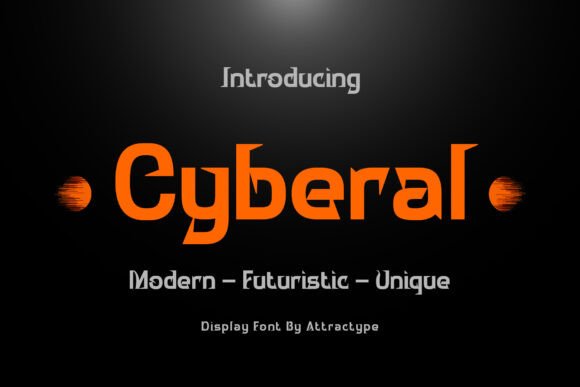
Cyberal: A Font That Brings Futuristic Elegance to Your Brand
There’s something oddly satisfying about opening a blank brand board and staring at the white canvas, knowing that one choice—just one—could define the entire visual language of a project. I recently found myself in that situation while working on a boutique identity project for a tech-savvy startup. After testing several fonts, I settled on Cyberal. It wasn’t just about aesthetics; it was about how Cyberal felt in context, how it interacted with other design elements, and whether it could carry the weight of a brand’s identity.
Cyberal for Tech-Themed Branding and Digital Assets
When I first saw Cyberal, I knew it had potential. Its sleek lines and smooth curves immediately struck me as something out of a sci-fi movie or a high-tech interface. But what really made it stand out was how it worked in real-world scenarios. For the startup’s logo concept, I paired Cyberal with a minimalist icon and a clean sans-serif body text. The contrast between the sharp, futuristic Cyberal and the more grounded body font created a dynamic tension that felt both modern and approachable.
One of the key strengths of Cyberal is its versatility. While it’s often used as a display font, I found it could also serve as a headline or even an accent font when scaled down. On a website header, Cyberal added a sense of urgency and innovation that aligned perfectly with the startup’s vision. It didn’t feel overwhelming, which is crucial for digital assets where readability and visual hierarchy matter.
Cyberal for Social Media Graphics and Brand Consistency
Testing Cyberal on social media layouts was another highlight. Instagram posts, Twitter headers, and Facebook banners all benefited from the font’s clean, modern look. I used it for headlines and call-to-action buttons, and the results were impressive. The sharp lines gave the designs a sense of energy and clarity, while the smooth curves softened the overall appearance, making it feel less harsh than some other futuristic fonts.
What I love most about Cyberal is how it supports brand consistency across different platforms. Whether it’s a business card, a packaging mockup, or a website hero section, the font maintains its character without losing its impact. This makes it an excellent choice for brands that want to maintain a cohesive visual identity while still standing out in a crowded market.
Cyberal for Packaging Design and Product Labels
I also tested Cyberal on a skincare product packaging mockup. The font’s futuristic aesthetic worked well with the product’s clean, minimalist design. However, I noticed that at smaller sizes, the fine details of Cyberal could become less legible. This isn’t a deal-breaker, but it’s something to keep in mind if you’re using it for product labels or small print materials.
That said, Cyberal shines when used as a display font. On a product label, it adds a touch of sophistication and innovation that aligns with the brand’s image. I paired it with a simple sans-serif font for the body text, and the combination felt balanced and professional. It’s a great example of how Cyberal can elevate a design without overshadowing the rest of the content.
Cyberal for Web Design and Editorial Layouts
In web design, Cyberal performed exceptionally well. I used it for headings and navigation menus, and it added a modern edge to the site’s overall aesthetic. The font’s clean lines and smooth curves made it easy to read, even at smaller sizes, which is essential for user experience. However, I would caution against using Cyberal for long body text. It lacks the warmth and comfort of more traditional sans-serif fonts, which could make it feel less approachable for extended reading sessions.
For editorial design, Cyberal works best as a headline or title font. When used sparingly, it can add a unique flair to magazine covers, brochures, or newsletter headers. I found that pairing it with a serif font like Georgia or Times New Roman created a nice contrast that enhanced the overall design. It’s a great reminder that Cyberal is not just a display font—it’s a versatile tool that can adapt to different design needs.
Cyberal for Logo Design and Brand Identity
Finally, I tested Cyberal in a logo design scenario. The font’s futuristic look made it an excellent fit for a tech-themed brand, but I also considered its use for more creative or artistic projects. I experimented with different weights and styles, and the result was a logo that felt both bold and refined. The sharp lines gave it a sense of power, while the smooth curves added a touch of elegance.
One thing I noticed was that Cyberal can be a bit too stylized for certain industries. If you’re working on a formal corporate brand or a traditional retail project, it might not be the best fit. But for brands that want to stand out and embrace a modern, innovative identity, Cyberal is a fantastic choice. It has the ability to convey both professionalism and creativity, making it a valuable asset in any designer’s toolkit.
If you’re looking for a font that can elevate your branding work with a touch of futurism, Cyberal is worth considering. Just remember to test it in different contexts and pair it wisely with other fonts to ensure balance and readability. And always check the licensing before using it in client work or commercial projects. With the right application, Cyberal can become a standout element of your brand identity.